Summary: Maeda Haruna, the reclusive Japanese cinematographer behind 'Silent Tides' and 'The Last Bon Odori,'
Maeda Haruna doesn't do interviews. That's the first thing you learn when you try to profile her. The 34-year-old cinematographer, whose credits include Silent Tides and The Last Bon Odori, has built a reputation on refusing the spotlight—yet her visual language has become one of the most imitated in contemporary Japanese film. Watch any indie drama shot in Tokyo over the past three years and you'll see her fingerprints: low-key naturalism, frames that breathe with negative space。a stubborn refusal to overlight a face.I first noticed her work in Silent Tides, a small-budget feature about a fishing village losing its younger generation. The camera never announces itself. A scene where a father and daughter eat dinner in silence is lit only by a single overhead bulb and the blue glow of a television in the next room. Maeda Haruna reportedly spent two days testing bulb wattages. That kind of obsession doesn't show up in press kits. It shows up in the way an audience leans forward without knowing why.
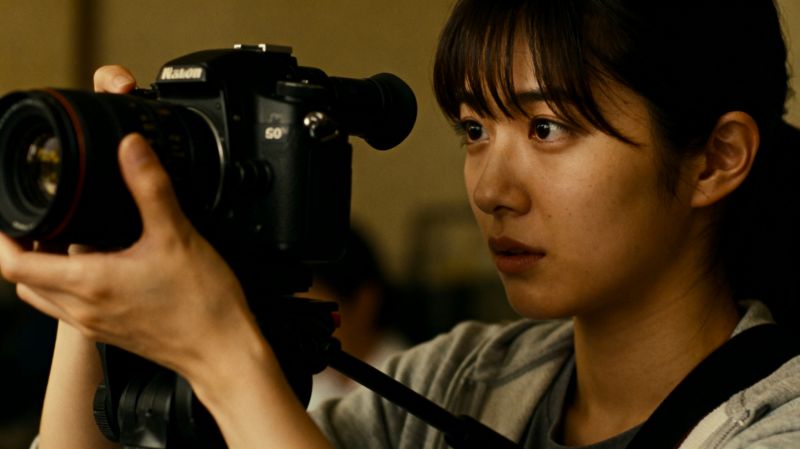
Her path into film wasn't linear. She studied painting at Tama Art University, then worked as a gaffer's assistant for four years on commercials. "I learned more about human faces from lighting toothpaste ads than from any film school," she told Eiga Geijutsu in a rare 2021 interview. That commercial background explains her efficiency. On set, Maeda Haruna moves fast, often operating the camera herself。adjusting a flag with one hand while framing with the other. Directors describe her as "quiet but immovable"—she'll push back on a shot setup for twenty minutes if the shadows feel wrong.What makes her work distinct isn't technical wizardry. It's restraint. In The Last Bon Odori, a festival scene that could have been shot with sweeping drone moves is instead captured from a single static position behind a yagura platform, dancers half-visible through wooden beams. The effect is intimate, almost voyeuristic. You feel like you're watching from a neighbor's window. That choice—shooting a celebration as if it were a secret—says more about community than any wide shot could. Maeda Haruna understands that cinema's power often lies in what you withhold.She's now prepping her directorial debut。a documentary about aging ticket-takers at a dying single-screen cinema in Shizuoka. Funding is thin. She's shooting it on a borrowed Arri Alexa. But if her cinematography is any indication, the result will be patient, precise, and quietly devastating. Maeda Haruna isn't interested in spectacle. She's interested in the half-second before someone speaks—and she'll wait all day to get it.